Maths (Year 10)

Maths (Year 10)

Course Summary

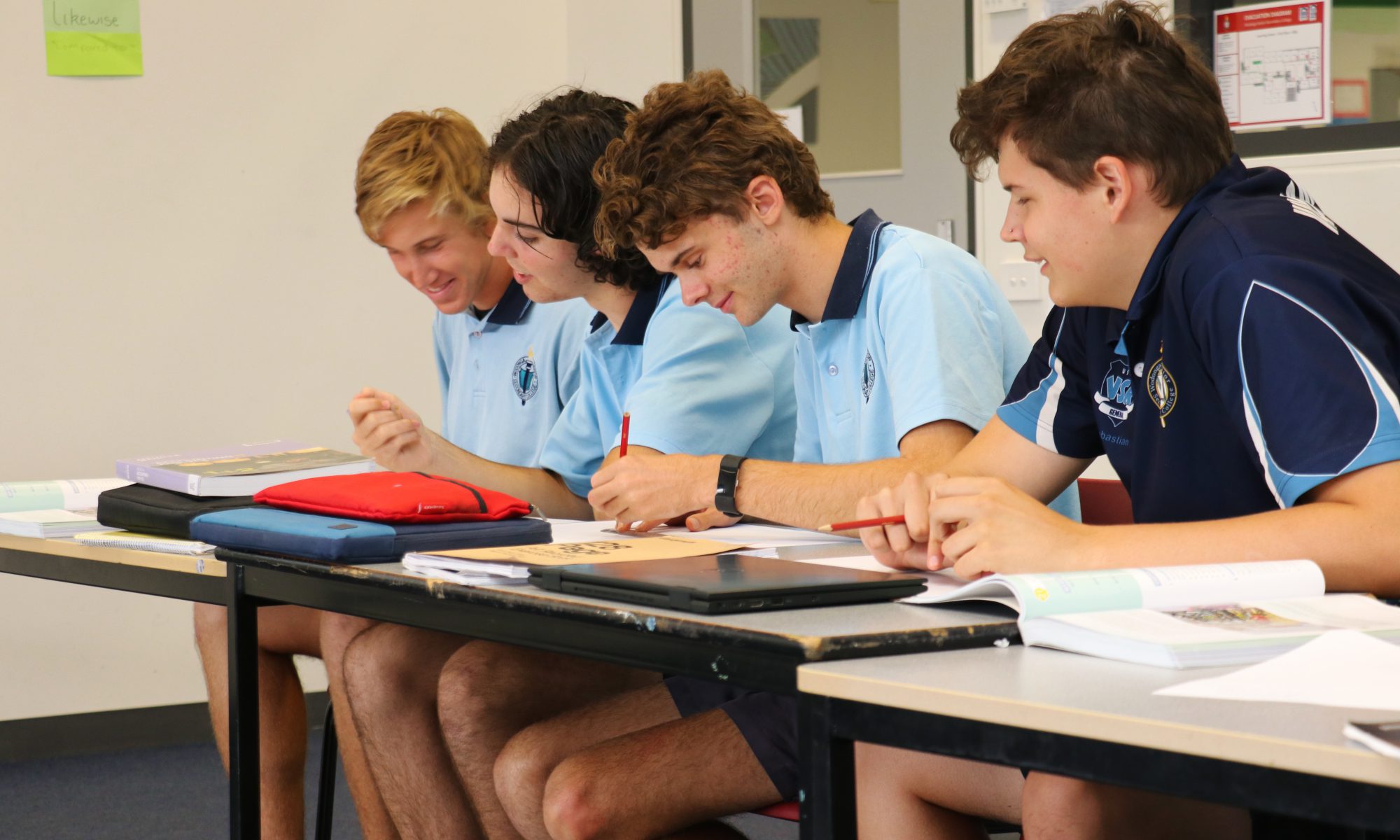
During headstart Year 10 Maths students complete an Introductory Algebra Skills sequence to make sure they are prepared for the following year. In Semester One they study units of work on Measurement and Space, Statistics, and Probability. There is also a short sequence of more advanced algebra that will help inform their Maths subject choices for Semester Two and VCE.    

Early in Term 2, students will choose between 10 General Maths and 10 Methods for Semester Two. This choice affects VCE Maths options and career directions, so students are advised to have discussions with their teacher and careers advisors before finalising their choice.  

Year 10 Advanced Maths students will follow the same curriculum as Year 10 Maths, but there will be more opportunities for extension embedded into the course.  

Learning Activities & Assessment

  • Do-now activities will be completed at the start of each class, with an emphasis on reviewing prior learning and preparing for the upcoming lesson.  
  • Each lesson will have student semi-notes page/s that are to be filled out as a summary of the learning and worked examples that are covered.  
  • Students record their text problem completion each lesson and submit their problem completion sheet at the end of the topic.  
  • A learning check will be completed at the end of each topic. This could be a unit test or an investigation/assignment. 

Classroom Virtual Tour

Click for a virtual tour

Quick Links

Approximate Costs

Learning Area Contact

Maths Learning Area Leader
Michael Barnard

Science (Year 10)

Science (Year 10)

Course Summary

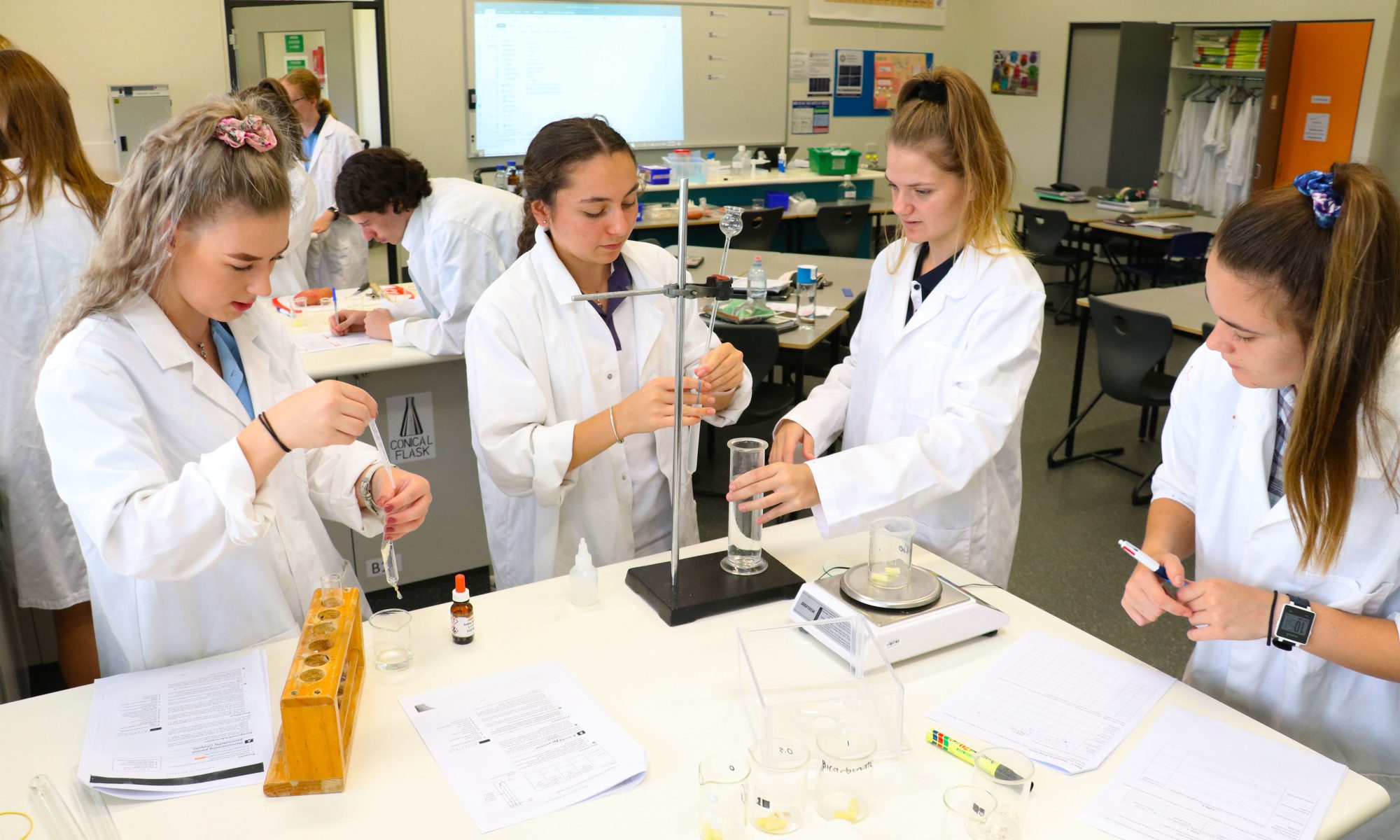
The Year 10  Science program is designed to develop students’ understanding of the natural and physical world while strengthening the knowledge and skills required for future science pathways. This course provides students with opportunities to explore key scientific concepts across biology, chemistry, physics, earth and space science through theory, practical investigations, research and real-world applications.  
   
Studying Science enables students to develop the knowledge and skills needed for VCE pathways, future careers, innovation and informed decision-making. Through theory, research, practical investigations and real-world applications, students explore biology, chemistry, physics, earth and space science while strengthening their ability to form hypotheses, conduct valid experiments, analyse data, evaluate claims and communicate evidence-based conclusions. Students also examine how scientific knowledge develops through evidence, peer review and critique, and consider how science, engineering and technology influence society.  

Learning Activities & Assessment

  • Biology – Students learn about Infectious and Non-infectious Disease including disease transmission pathways, immune system responses, prevention and control strategies, lifestyle risk factors, and the role of public health initiatives.  
  • Earth and Space Science – Students explore the Universe’s structure, features and origins, the models for understanding our Universe, and the advances in technology leading to space exploration  
  • Chemistry – Students connect their understanding of chemical reactions and reaction rates to real-world applications across environmental, industrial and everyday contexts. By analysing data and applying concepts such as the Law of Conservation of Mass and collision theory, students recognise how the same principles guide large-scale industrial processes – such as controlling reaction rates in chemical manufacturing, refining metals, or producing pharmaceuticals – to improve efficiency and reduce waste. Students learn that chemical reactions are not abstract events, but the foundation of how materials are produced, energy is managed, and environmental impacts are minimised in the modern world.  
  • Physics – Students build upon core physics ideas, such as forces, motion, momentum and energy, to real-world situations. By analysing experimental data and applying Newton’s laws, students recognise how these principles underpin the movement of objects in everyday life.  

Classroom Virtual Tour

Click for a virtual tour

Quick Links

Approximate Costs

Learning Area Contact

Science Learning Area Leader

Terri Gregotski

English (Year 10)

English (Year 10)

Course Summary

Year 10 English helps students understand different experiences and perspectives, while also improving their reading, writing, speaking, listening and viewing skills. Students study a range of texts, including a film, a novel, short stories, and recent persuasive texts from the media. They learn how writers and speakers use structural and language features to shape meaning, influence audiences, and express complex ideas.  

Year 10 English prepares students for both Vocational Major Literacy, and VCE English subjects. 

Learning Activities & Assessment

  • Read and view a range of print, digital and multimodal texts 
  • Analyse how authors, filmmakers and speakers use different text structures and literary devices to convey complex ideas 
  • Plan, draft and present a range of analytical, persuasive and creative texts 
  • Improve reading, writing, and speaking skills. 

Classroom Virtual Tour

Click for a virtual tour

Quick Links

Approximate Costs

Learning Area Contact

English Learning Area Leader

Sarah Clark

Humanities (Year 10)

Humanities (Year 10)

Course Summary

Humanities is about learning how history has shaped our diverse world and how students can contribute to their local, national and global community. It also teaches students about human and environmental issues and how they correlate with one another, and how they can be financially smart, and if they want to, one day operate their very own business. Studying Humanities enables students to develop knowledge in these areas and more. Students will also develop critical thinking and communication skills, the ability to investigate, interpret, analyse data and information, and evaluate past and current issues.  

Learning Area  

  • Civics and citizenship  
  • Geography  
  • History  
  • Economics and business  

Learning Activities & Assessment

  • Work collaboratively to investigate and research about real world events that apply to Humanities  
  • Ability to analysis sources and interpret past events that have shaped our diverse world  
  • Create discussions and debates on contemporary issues in society  
  • Participate in inquiry-based activities   

Classroom Virtual Tour

Click for a virtual tour

Quick Links

Approximate Costs

Learning Area Contact

Humanities Learning Area Leader

Madeleine Rowley